


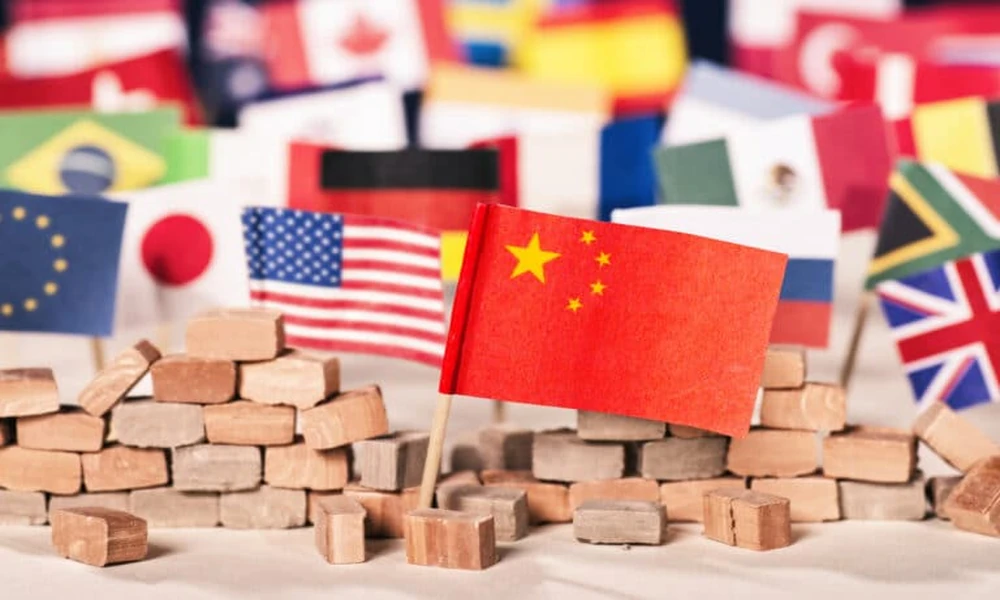




Worldwide manufacturers are searching for ways to cut costs and meet environmental objectives. Many executives studying these issues are searching for practical ways to limit disruptions when implementing carbon reductions. A method that can help accomplish both is the china plus one model where manufacturers will be able to produce some of their products in China and establish other manufacturing capabilities outside of China to manage risk. If there is no plan in place, teams may become too spread out among many locations.
Ultimately, teams will fail to meet both reliability and sustainability metrics. As leaders rely on intuition rather than measurable criteria, confusion increases. Decisions become reactive and difficult to justify to board members or investors.
Why Structure Beats Intuition in Supply Choice Decisions?
A structured process is necessary to make decisions using defined criteria. Intuition may be able to disregard emissions data and labour standards however structure will convert general goals into measurable actions. Determine your current exposure to China in terms of volume and risk.
• Set minimum ESG score requirements for each new location.
• Qualify critical components twice.
• Monitor carbon intensity per unit at all locations.
Establishing Parallel Production Capabilities in Lower-Risk Regions
The idea is to keep the main manufacturing base in China but create another manufacturing base in a country where there is more renewable energy and/or better government. Manufacturers will usually move their first line of assembly to Vietnam because of its low cost of labour and good export infrastructure.
At first, many of the parts will still come from China. However, a major issue is that it takes time to build up local supplier networks therefore, it could be several years of investing in these networks before all of the materials are being supplied locally.
Incorporating Sustainability Metrics into Sourcing Rules
Teams apply ESG criteria when selecting new suppliers. They do this by assessing each site’s carbon emissions from its power grid, water use and documentation of labour practices before making purchases. For example, a company may assess three potential sites and award the first order to the site that has the highest score.
Utilizing Dual Networks to Achieve Both Cost and Emission Goals
Managers utilize many different supply chains to transport goods from China to other countries depending upon tariff rates, energy costs, and government regulations. The china plus one strategy enables managers to maintain a stable per unit cost however, it also increases the total quantity of products manufactured with cleaner forms of electricity.
Action Plan for Implementation
• Complete an audit of all current suppliers’ ESG performance in 90 days
• Choose one additional country to be used as a source for your supply chain, based upon a comparison of their energy mix and logistics cost
• Move 10% of your total volume to this new location for six months
• Assess the results of moving 10% of your total volume to this new location, relative to your targets for both emissions intensity and landed cost
• Increase the volume of product being moved to this new location only after the 10% pilot has met the established thresholds
Developing Habits for Continuous Improvements
The improvements are made through numerous small-scale tests; each test is then evaluated honestly. When teams gather data on a monthly basis about costs, emissions and on-time delivery they create an ongoing feedback loop. It is the consistency of these evaluations which will be more critical than any one large scale event.
Frequently Asked Questions
· Does the model require exiting China completely? No. The model maintains China as a primary base while adding capacity elsewhere.
· How does it support sustainability targets? It provides access to power grids with higher renewable shares and to locations with tighter labour oversight in some cases.
· What timeline is realistic for first results? Many product lines can begin dual sourcing within 12 months when the second country already has basic infrastructure.
· Does the strategy increase total costs? Early stages usually increase costs however, the gap decreases once volume increases and negotiation leverage increases.
Success in closing deals is based on consistent implementation of plans, not necessarily on a “perfect” plan. When teams analyze data every three months and make changes to their process without creating a lot of fuss, they will have developed the ability to be resilient and environmentally friendly over time regardless of what happens in the marketplace.